
Table of Contents
ToggleBuilding an outdoor kitchen is a solid investment in your home and lifestyle. Unlike slapping up a deck or painting a shed, outdoor kitchens involve gas lines, electrical work, drainage, and often permit requirements, jobs that demand skilled hands and proper credentials. Finding the right contractor to handle your project isn’t about grabbing the cheapest bid or the first name you Google. It’s about understanding what separates a contractor who’ll deliver a functional, beautiful outdoor kitchen from one who’ll leave you with headaches and a half-finished grill island. This guide walks you through vetting contractors, understanding costs, spotting red flags, and making a decision you’ll feel confident about.
Key Takeaways
- Outdoor kitchen contractors need proper licenses, insurance, and a track record of completed projects—verify credentials against your state’s licensing board before hiring.
- Get multiple written estimates that specify materials by brand and model, labor costs, timeline, and payment terms to compare outdoor kitchen contractors accurately.
- Ask contractors detailed questions about similar projects, permit requirements, warranty coverage, and how they handle unexpected issues to identify red flags early.
- Outdoor kitchen costs range from $5,000–$10,000 for basic setups to $40,000+ for high-end kitchens; budget 10–15% extra for contingencies like foundation work or electrical rerouting.
- Avoid contractors who skip permits, demand full upfront payment, lack insurance, or show poor communication—these warning signs indicate corners being cut and future problems.
- Request references from past clients and review recent 3–4 star reviews alongside top ratings to get honest feedback on how contractors handle specific issues and maintain timelines.
What to Look for in an Outdoor Kitchen Contractor
A good outdoor kitchen contractor combines technical skill, relevant licenses, and a track record of completed projects. Start by verifying they hold the required licenses, most states mandate electrical and gas certifications for work involving those utilities. Ask to see their licenses and check them against your state’s licensing board. They should carry liability insurance and workers’ compensation insurance, protecting both you and their crew if something goes wrong on your property.
Experience matters. A contractor who’s built dozens of outdoor kitchens understands how weather affects materials, how to properly slope surfaces for drainage, and how to work with building codes specific to outdoor structures. They’ll know whether your soil can support a stone or concrete countertop without additional foundation work, and they’ll catch design issues before construction starts.
Look for contractors who pull permits. If they’re suggesting you “skip the permit hassle,” that’s a massive red flag. Permits exist for safety and code compliance. They also protect you legally if something fails or causes injury. A contractor familiar with your local building department knows exactly what’s needed and won’t delay your project.
Key Questions to Ask Before Hiring
Before signing anything, ask these questions and listen carefully to their answers:
- “Can you walk me through a similar project you’ve completed?” Request photos, contact info for past clients, and specific details about materials used and timelines.
- “What permits and inspections does this project require?” They should confidently outline municipal requirements without hemming and hawing.
- “How do you handle unexpected issues, like discovering unstable soil or rotten joists?” Their answer reveals whether they plan ahead or wing it.
- “What’s your warranty on materials and labor?” Standard practice is 1-2 years on labor, manufacturer warranty on materials.
- “Who handles the actual construction, your crew or subcontractors?” Direct control usually means better consistency.
- “What’s your communication style?” Will they update you weekly, or only when problems arise?
- “How do you handle change orders?” If you want to upgrade the grill halfway through, what’s the process?
Their willingness to answer these thoroughly and patiently signals professionalism. Vague answers or impatience are early warnings.
How to Find Contractors in Your Area
Start with your local network. Ask neighbors, friends, and your realtor for recommendations, especially if you’ve seen outdoor kitchens you like in your area. Word-of-mouth often uncovers contractors with solid reputations who don’t spend much on advertising.
Online directories and review platforms cast a wider net. The HomeAdvisor database matches homeowners with vetted professionals in their zip code and displays customer reviews and ratings. Angi (formerly Angie’s List) functions similarly, providing contractor ratings, job costs for your area, and user feedback. Both platforms let you filter by specialization, so you’re seeing contractors who specifically do outdoor kitchens, not general handymen.
Google Maps and local searches turn up contractors with public reviews and often their portfolios. When you find prospects, spend time reading recent reviews, not just the 5-star glow pieces, but 3- and 4-star reviews that mention specific issues and how the contractor handled them.
ImproveNet is another resource: it provides cost guides for outdoor kitchen projects in your region and connects you with contractors. This helps calibrate your expectations before talking to anyone.
Once you’ve narrowed to 3-5 contractors, request detailed written estimates (not just phone quotes). A professional estimate includes labor, materials, timeline, payment terms, and what’s included versus what costs extra. The estimate should reference specific products by name and model, not vague categories like “stainless steel countertop.”
Understanding Outdoor Kitchen Costs and Budgeting
Outdoor kitchen costs vary wildly based on size, materials, and complexity. A basic setup with a grill, countertop, and minimal built-ins might run $5,000–$10,000 installed. A mid-range kitchen with quality cabinetry, multiple appliances, and finished surfaces sits at $15,000–$30,000. High-end kitchens with stone countertops, luxury appliances, and custom features exceed $40,000–$50,000.
Break down where money goes: appliances (grill, cooktop, fridge, sink), cabinetry and countertops, electrical and gas work, concrete or pavement, and labor. Labor typically accounts for 40–50% of the total cost. Materials drive the rest.
Get multiple estimates to compare. Don’t automatically choose the cheapest, a lowball bid often signals corners being cut or inexperience. A contractor pricing well below others may be using lower-quality materials, understaffing the job, or skipping prep work. Conversely, the highest bid isn’t automatically best: some contractors simply charge premium rates.
Budget for contingencies. Unexpected issues, rerouting electrical lines, reinforcing the foundation, or upgrading drainage, commonly add 10–15% to the initial estimate. Discuss this buffer with your contractor upfront so there are no surprise invoices at the end.
Payment terms matter. Legitimate contractors typically ask for a deposit (25–30%) to secure the start date, progress payments as milestones are reached, and a final payment upon completion. Avoid contractors demanding full payment upfront or cash-only arrangements.
Common Outdoor Kitchen Projects and Timelines
Understanding typical project scope helps you set realistic expectations and communicate clearly with contractors.
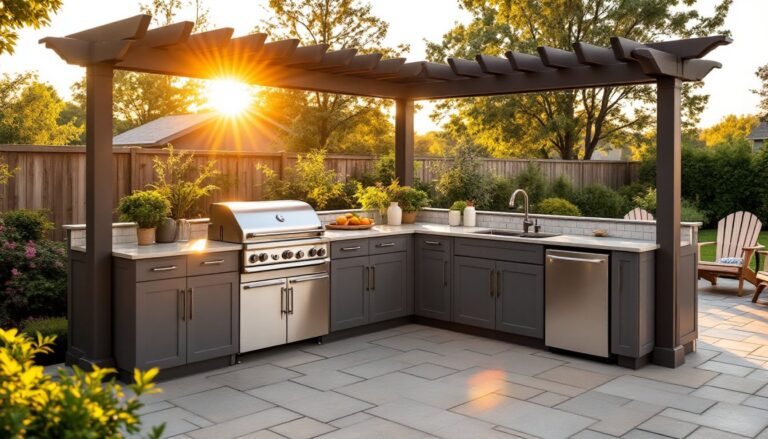
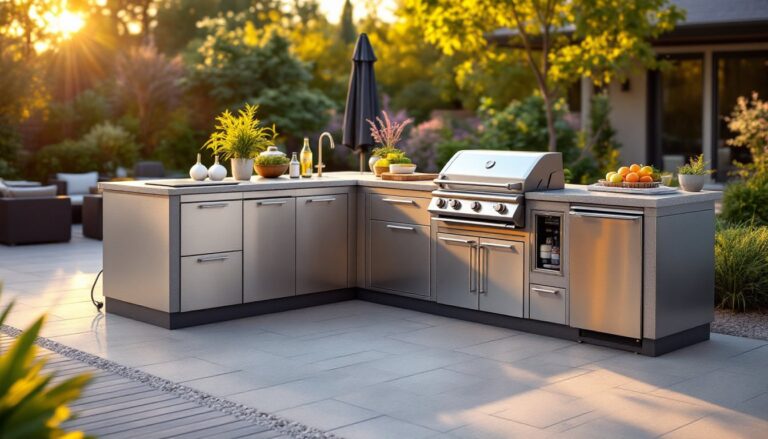
Grill island with countertop and storage (4–6 weeks): A modular grill, built-in countertop, and base cabinets. This is the entry-level outdoor kitchen, straightforward to permit and install if the foundation is solid.
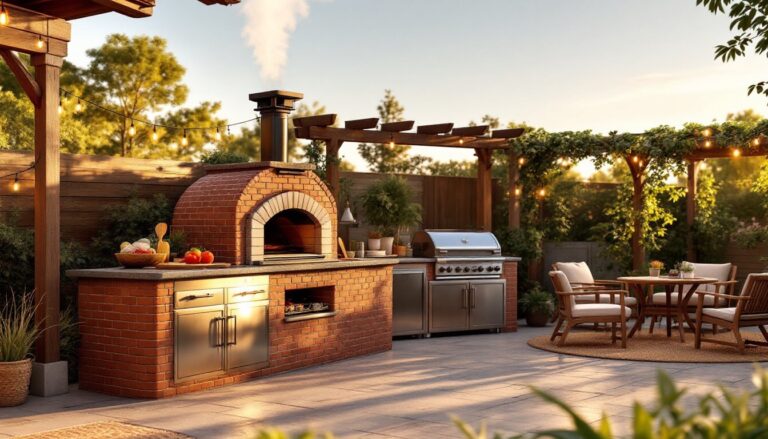
Full outdoor kitchen with multiple appliances (8–12 weeks): Adds a cooktop, mini fridge, sink with plumbing, and possibly a pizza oven or smoker. Requires gas and electrical rough-in, which adds complexity and timeline.
Premium custom kitchen with entertainment space (12–16 weeks): Includes high-end finishes, custom stonework, integrated lighting, built-in speakers, and extensive hardscaping. May involve structural work and multiple trade crews.
Timeline depends on permits too. Permit approval alone can take 2–6 weeks depending on your municipality. If the site requires excavation or foundation work, add 2–4 weeks. Weather can push timelines, especially in rainy or cold climates. A good contractor factors these into their schedule and communicates delays honestly.
Regional variations affect timelines as well. Coastal areas face stricter building codes: mountainous regions may have soil and drainage challenges. Outdoor kitchen ideas and solutions often adapt to local conditions, so a contractor familiar with your region will have faster execution.
Red Flags to Avoid When Hiring a Contractor
Certain warning signs indicate a contractor you should pass on.
No license, insurance, or verifiable references: If they can’t or won’t show proof, move on. It’s not being paranoid, it’s protecting yourself legally and financially.
Insistence on cash payments or no contract: Professional contractors issue invoices and accept standard payment methods. If they’re pushing cash or asking you to sign a napkin instead of a formal agreement, they’re likely not operating above-board.
Vague timelines or “we’ll figure it out as we go”: Outdoor kitchens involve permitting, weather windows, and material lead times. Contractors who shrug at planning details tend to miss deadlines and leave projects half-done.
Pressure to decide immediately or unrealistic lowball bids: High-pressure sales tactics and suspiciously cheap pricing often go hand-in-hand with quality problems.
Unwillingness to discuss permits or safety: This signals they’re cutting corners. Legitimate contractors embrace code compliance.
Poor communication or no written follow-up: If initial conversations are scattered or they don’t follow up on questions, expect communication problems during the build.
Negative reviews mentioning incomplete work, material substitutions, or disputes: One bad review could be an outlier. Several reviews citing the same issues? Pattern spotted.
Trust your gut. If something feels off in the first conversation, it’ll likely worsen once work starts.
Making Your Final Decision
After vetting contractors and gathering estimates, rank them by three criteria: qualifications and experience, detailed estimate clarity, and communication quality during the quoting process.
Schedule a final in-person consultation with your top 2–3 candidates. Watch how they interact with you and their crew (if they bring one). Do they ask good questions about your vision and needs, or are they prescriptive without listening? Do they stand behind their work with a solid warranty?
Check references personally. Call past clients and ask about the quality of work, whether the project stayed on budget and timeline, and whether they’d hire the contractor again. Don’t rely solely on reviews, a quick conversation tells you more.
Review the contract thoroughly before signing. It should specify scope of work, materials by brand and model, timeline with start and completion dates, total cost, payment schedule, warranty terms, and what happens if change orders arise. If anything is unclear, ask the contractor to clarify in writing. Custom outdoor living solutions often involve details that need spelling out, so don’t skip this step.
Once you’ve selected a contractor, establish clear communication: How often will you receive updates? Who’s your main point of contact? How are change orders handled? Getting these expectations aligned before day one prevents frustration later. A strong contractor-homeowner relationship built on clear communication and mutual respect makes the difference between a stressful project and one you actually enjoy watching come to life.