Table of Contents
ToggleAdding a pizza oven to an outdoor kitchen transforms a backyard into an entertainment hub that entertains family and friends year-round. Whether you’re grilling steaks, roasting vegetables, or pulling out wood-fired pizzas, a well-planned outdoor kitchen with pizza oven becomes the centerpiece of outdoor living. This guide walks homeowners through the essentials: design layout, oven types, material choices, and the practical steps to build a functional space that matches both your lifestyle and budget. Before breaking ground, you’ll need honest answers about space, installation complexity, and long-term upkeep, all covered here.
Key Takeaways
- An outdoor kitchen with pizza oven transforms your backyard into an entertainment hub that extends outdoor living into fall and winter while increasing home resale appeal.
- Wood-fired ovens deliver authentic flavor at 700–900°F but require 30–45 minutes to preheat, while gas-powered ovens reach cooking temperature in 10–15 minutes with precise heat control.
- Plan your outdoor kitchen layout around a work triangle (prep area, cooking zone, and dining space) with at least 6–8 feet of clearance in front of the oven for safety and comfort.
- Material costs range from $800–$2,500 for ceramic kits to $15,000–$25,000+ for custom brick ovens with full kitchen infrastructure, utilities, and hardscaping.
- Successful pizza oven ownership requires honest planning about space, building codes, utility access, and budgeting 5–10% annually for maintenance including chimney cleaning, sealing, and repairs.
- Supplementary cooking features like grills or cooktops, proper lighting, shade structures, and weatherproof storage maximize usability and encourage regular use of your outdoor kitchen.
Why Add A Pizza Oven To Your Outdoor Kitchen
A pizza oven does more than cook pizzas. It’s a focal point that draws people together and extends your outdoor living season into fall and winter. The radiant heat from the oven keeps guests comfortable during cool evenings, and the ambient warmth creates an inviting atmosphere that standard grills don’t match.
From a practical standpoint, pizza ovens reach temperatures of 600–900°F (wood-fired) or 400–500°F (gas-powered), meaning you can roast whole chickens, bake fresh bread, slow-cook meats, and sear vegetables in minutes. This versatility justifies the investment for homeowners who plan to use it regularly. Beyond entertaining, a quality outdoor kitchen with pizza oven increases home resale appeal, outdoor living space has become a major draw in the real estate market since 2020.
The experience itself matters. There’s a primal satisfaction in tending a fire, watching dough bubble and char, and serving food you’ve cooked outdoors. It encourages slower meals, conversation, and disconnection from screens. If you entertain frequently or simply want to elevate your backyard, a pizza oven delivers both function and lifestyle value.
Essential Layout And Space Planning Considerations
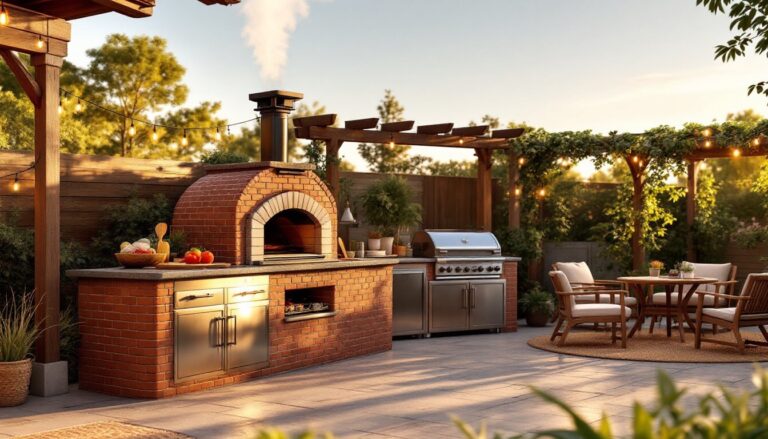
Before you buy a single brick, measure your space honestly. A functional outdoor kitchen needs room for the oven, counter space for prep, a grill or cooktop, storage, and clear movement between zones. Most pizza ovens occupy a footprint of 3–4 feet wide by 2–3 feet deep, but you’ll want at least 6–8 feet of clearance in front for safety and comfort.
Layout typically follows a work triangle: prep area, cooking zone (oven + grill), and serving/dining space. Position the oven where prevailing winds carry smoke away from your home and neighbors. Check your local building codes and zoning restrictions before finalizing placement, some jurisdictions require setbacks from property lines or prohibit outdoor cooking in certain areas.
Consider utility access. You’ll need a clear path to water (for a sink), gas lines (if using a gas oven), and electricity (for lighting and appliances). Running these utilities later costs significantly more, so plan the footprint around existing infrastructure. If your space is tight, focus on the essentials: oven, small counter, and storage. Expanding later is easier than retrofitting.
Orientation matters too. Position the oven opening away from afternoon sun if you live in a hot climate, it will be more comfortable to cook. In cooler regions, afternoon sun can be welcome. Think about shade from trees or a pergola: full sun during a summer dinner prep gets exhausting fast.
Pizza Oven Types And Materials To Match Your Style
Wood-Fired Vs. Gas-Powered Options
Wood-fired ovens are the traditional choice and deliver authentic flavor through real flame and smoke. They reach higher temperatures (typically 700–900°F), cook faster, and create that signature char and smoky taste. Downside: they require seasoning, skill to maintain consistent heat, and a supply of dry firewood. They’re slower to preheat (30–45 minutes) and less precise for temperature control.
Gas-powered ovens are convenient, reach cooking temperature in 10–15 minutes, and let you set precise heat without tending a fire. They’re easier to learn and maintain but lack the authentic wood-fired flavor and cost more to operate over time. Gas ovens typically run 400–500°F, which still cooks excellent pizzas but takes slightly longer than wood-fired models.
Material choice depends on budget and durability. Clay or ceramic ovens are affordable ($800–$2,500 for modular kits) and charming, but they crack in freeze-thaw cycles and require a protective shelter in cold climates. Brick ovens ($2,000–$5,000+, plus labor) are durable, heat-efficient, and age beautifully. Stainless steel ovens are modern and low-maintenance but cost more upfront ($3,000–$8,000+). Stacked stone or concrete-block bases with clay inserts offer a middle ground.
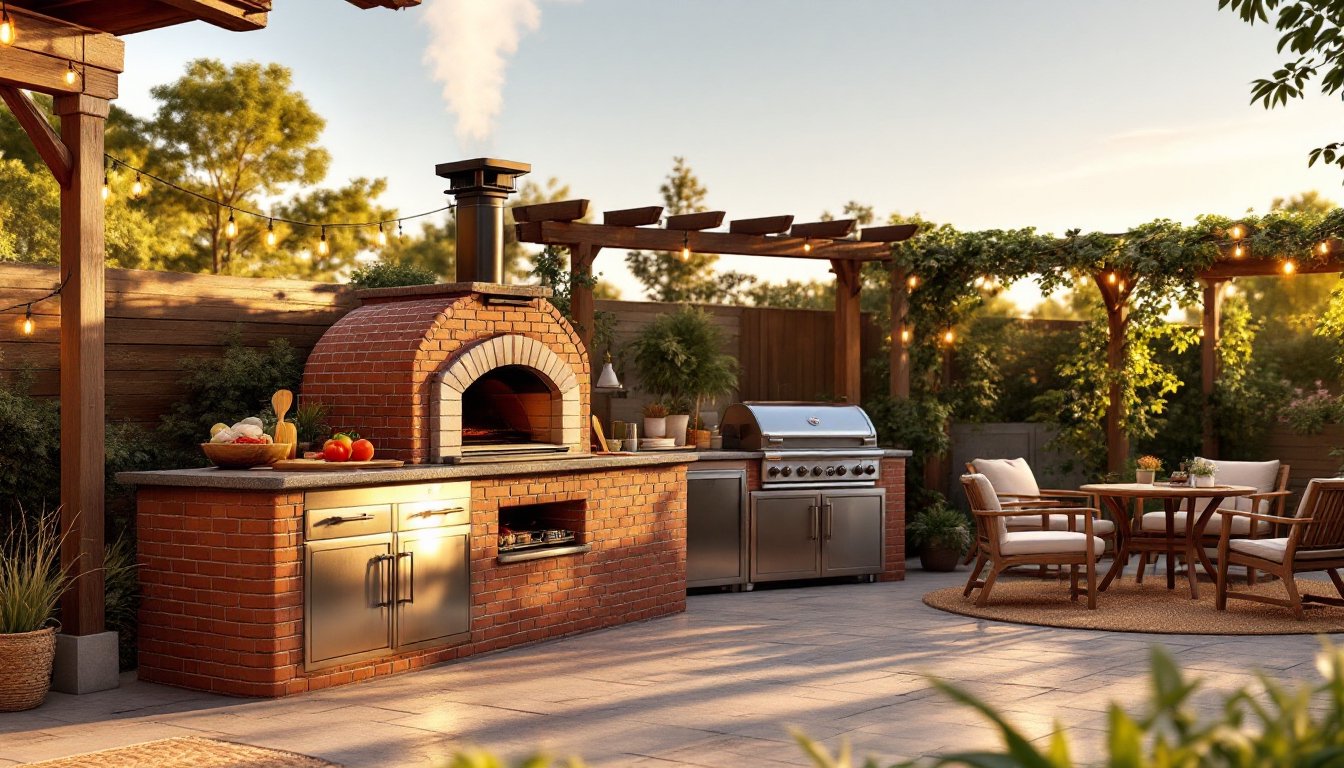
Designing an outdoor kitchen with pizza oven means matching the oven type to your cooking style and commitment level. Wood-fired suits enthusiasts willing to learn and spend time tending fire. Gas works best for busy families who value convenience. Your choice affects not just initial cost but also insurance, maintenance schedules, and how often you’ll actually use it.
Building Your Outdoor Kitchen Setup Around The Oven
Once you’ve chosen your oven, design the surrounding kitchen. The oven is the anchor: everything else supports the cooking process.
Counter and prep space should be adjacent to the oven, within arm’s reach is ideal. Granite, stainless steel, and sealed concrete are popular choices for outdoor surfaces because they withstand weather and cleanup is straightforward. Plan at least 3 feet of counter on one side for prepping dough and ingredients. A small sink (400–600 GPM) placed near prep makes rinsing produce easy.
Storage keeps tools and ingredients dry and organized. A weatherproof cabinet or built-in box stores pizza peels, brushes, and kindling (if wood-fired). Don’t skimp here, wet, disorganized spaces discourage use.
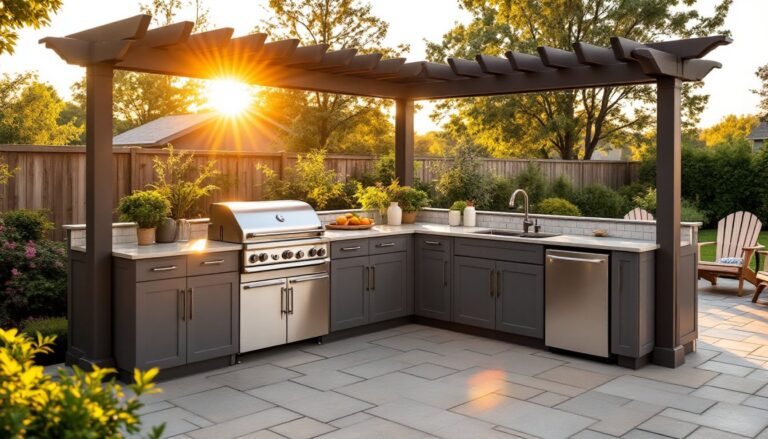
Supplementary cooking matters more than you’d think. Many pizza oven owners add a grill or side cooktop for grilled vegetables, seared meats, or pasta water. This flexibility keeps guests happy and your oven free for its primary job. Custom Outdoor Living: Enhancing spaces often includes these secondary features to maximize usability.
Lighting and shade transform your space into an all-hours entertainment area. String lights add warmth and ambiance: recessed deck lights or landscape uplighting provide function. A pergola or retractable awning gives relief from sun or light rain.
Safety and clearance aren’t optional. Place the oven on a non-combustible base (concrete slab or reinforced foundation). Install a spark arrestor or chimney cap if using wood-fired. Keep the oven at least 10 feet from your house and any overhanging trees. Verify your local fire codes, some require permits and inspections.
Budget, Installation, And Long-Term Maintenance
Total cost varies wildly depending on choices. A modular gas pizza oven with basic counter and shelter runs $4,000–$8,000 installed. A custom brick oven with full kitchen, utilities, and hardscaping can exceed $15,000–$25,000. Start with a realistic budget and prioritize the oven itself, cheap counters and fixtures can be upgraded, but a poorly built oven wastes money.
Installation depends on complexity. Prefab modular ovens bolt together in a day or two: hand-laid brick ovens need a skilled mason and take weeks. Gas lines and electrical work require licensed contractors in most states, don’t DIY these. Factor in permitting costs ($200–$1,000) and potential inspections before finalizing budget.
Long-term maintenance is often overlooked. Wood-fired ovens need annual chimney cleaning, seasonal sealing, and shelter from weather. Gas ovens require burner inspection and occasional seal replacement. Counters and appliances need regular sealing and upkeep. Budget 5–10% of your initial investment annually for maintenance.
Insurance and HOA rules matter. Contact your homeowner’s insurance agent before building, some policies exclude or charge extra for outdoor cooking installations. Check HOA restrictions if applicable: fire codes and setback requirements vary significantly by jurisdiction.
For budget-conscious homeowners, outdoor kitchen ideas on a budget can help stretch dollars. Consider phased installation: start with a modest oven setup and expand counter space later. Visit design resources like Houzz for inspiration and real-world cost breakdowns from completed projects. Country Living and Gardenista’s outdoor kitchen guide offer practical examples of mixed-budget kitchens. Honest planning now prevents costly mistakes later.
Conclusion
Building an outdoor kitchen with pizza oven is a significant investment in lifestyle and home value. Success depends on honest planning: measure your space, understand oven types, choose durable materials, and account for ongoing maintenance. Start with the oven, build supporting infrastructure around it, and expand as budget and time allow. The payoff, years of entertaining, cooking, and gathering, justifies the effort.