Table of Contents
ToggleAn outdoor kitchen isn’t just a grill bolted to a deck anymore, it’s a statement piece that transforms how you entertain and live. A high-end outdoor kitchen combines functionality, durability, and aesthetics to create a luxurious space that rivals your indoor cooking area. Whether you’re planning a complete backyard overhaul or upgrading what you already have, understanding the essentials of outdoor kitchen luxury means knowing which materials withstand the elements, which appliances deliver both style and performance, and how thoughtful design keeps guests flowing naturally through your space. This guide walks you through what separates a mid-tier outdoor kitchen from one that truly elevates entertaining.
Key Takeaways
- A high-end outdoor kitchen requires solid fundamentals: proper drainage, reinforced concrete foundation, and code-compliant gas or electric lines installed by licensed professionals.
- Invest in built-in cabinetry with marine-grade aluminum frames, stainless steel doors, and durable counters like granite, poured concrete, or engineered quartz to resist weather and temperature swings.
- Create dedicated zones for grilling, prep work, and serving to mirror professional kitchen design and improve workflow, keeping guests flowing naturally through your space.
- Choose outdoor-rated appliances in commercial-grade or residential outdoor-specific lines, including stainless steel grills (Grade 304 or 316), outdoor refrigeration, and proper ventilation to ensure longevity.
- Layer your lighting with task, accent, and ambient options using LED and dimmable fixtures to make your outdoor kitchen luxury space functional and inviting after sunset.
- Plan a phased budget approach starting with the grill and cabinetry structure ($15,000–$50,000+ for a full setup), then add finishing touches over time while factoring in annual maintenance costs.
Understanding High-End Outdoor Kitchen Essentials
A luxury outdoor kitchen starts with the fundamentals: a well-built structure, reliable utilities, and components that don’t corrode or degrade after one harsh winter. At its core, you need proper drainage so water doesn’t pool under your prep surface, a solid base (typically a reinforced concrete slab, not packed dirt), and gas or electric lines run to code by a licensed professional.
High-end kitchens prioritize built-in cabinetry rather than standalone grills. Marine-grade or powder-coated aluminum frames with stainless steel doors resist rust and salt spray, critical if you’re near coastal areas. The counter surface itself is often granite, poured concrete, or engineered quartz: these materials handle temperature swings and won’t splinter like cheaper laminate. Backsplashes in tile or composite materials protect walls from splatter and add visual interest.
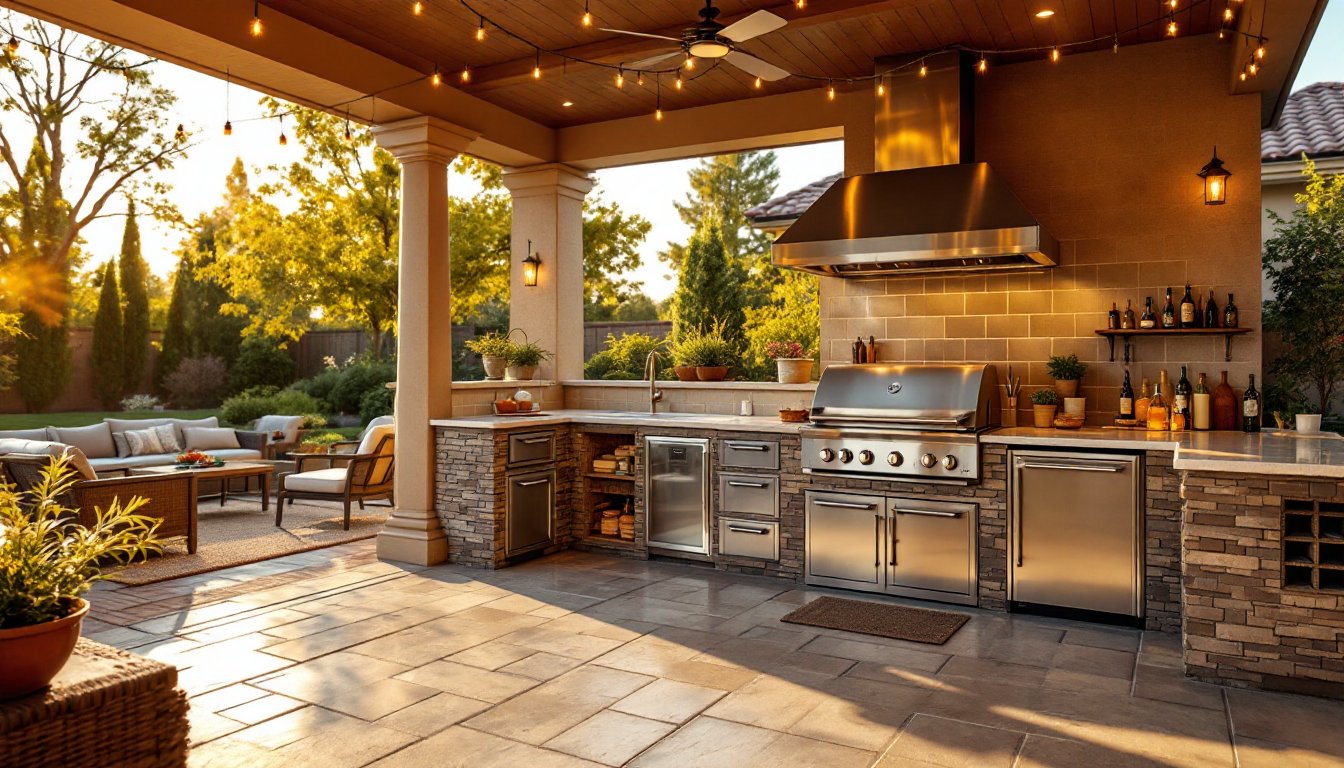
You’ll also want dedicated zones: a grilling station (with ventilation or a proper vent hood), a prep area separate from cooking, and a bar or serving counter. This separation mimics professional kitchen design and keeps cross-contamination risks low while entertaining. Integrated refrigeration, storage for utensils and linens, and even a small sink for hand-washing are hallmarks of thoughtful, luxury outdoor kitchen design. Don’t skip the details, towel hooks, electrical outlets rated for outdoor use, and properly sealed wood or composite under-counter storage all signal quality.
Choosing Premium Appliances and Materials
The appliances you choose determine both the lifespan and the pleasure of cooking outdoors. For grills, stainless steel models rated for outdoor use (commercial-grade or outdoor-specific residential lines) cost more upfront but won’t pit or rust after a few seasons. Look for grates made of cast iron or stainless steel, cheap painted steel warps and flakes.
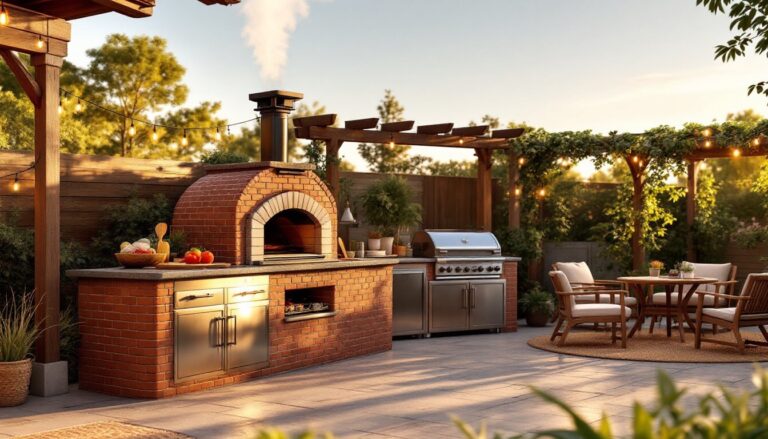
A full-featured outdoor kitchen might include a grill, a side burner for sauces, a rotisserie, a smoker, or even a wood-fired oven. High-end brands often offer modular systems so you can combine elements into an island. Refrigerators rated for outdoor use are essential: standard kitchen fridges aren’t designed for temperature swings and humidity. Garbage drawers or compactors keep the space tidy. Some homeowners add a second oven or pizza oven for multi-course entertaining, this is where outdoor kitchen luxury really shines.
Gas or charcoal? Gas offers convenience and speed: charcoal gives flavor and a lower entry price but requires more active attention. Premium models let you do both. Ensure your propane tank or natural gas line is vented safely and inspected by a licensed contractor. Electrical outlets should be GFCI-protected and rated for wet locations (typically outdoor-rated outlets in weatherproof boxes). Code requirements vary by jurisdiction: check with your local building department before finalizing placements.
Stainless Steel vs. Weather-Resistant Alternatives
Stainless steel is the industry standard for outdoor appliances and trim. Grade 304 resists corrosion well in most climates: grade 316 offers superior corrosion resistance near saltwater. Both patina slightly over time but don’t rust through. Powder-coated aluminum and composites offer lighter colors and modern aesthetics but may require more frequent maintenance and aren’t as durable long-term.
Concrete counters, sealed properly, age beautifully and handle heat from pans or tools. Granite is heavier, requires professional installation, and needs annual sealing. Engineered quartz is lower maintenance, non-porous and doesn’t need sealing, but costs more per square foot. Your choice depends on climate, budget, and how much maintenance you’re willing to do. Coastal or humid regions benefit most from stainless steel and sealed composites: drier climates are more forgiving.
Layout Planning for Optimal Flow and Functionality
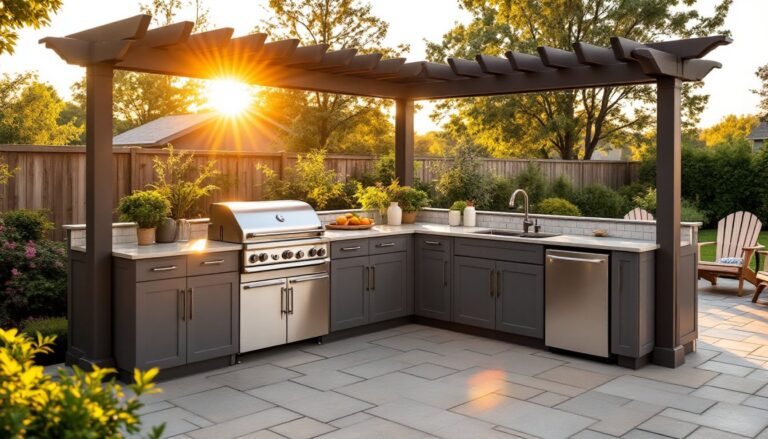
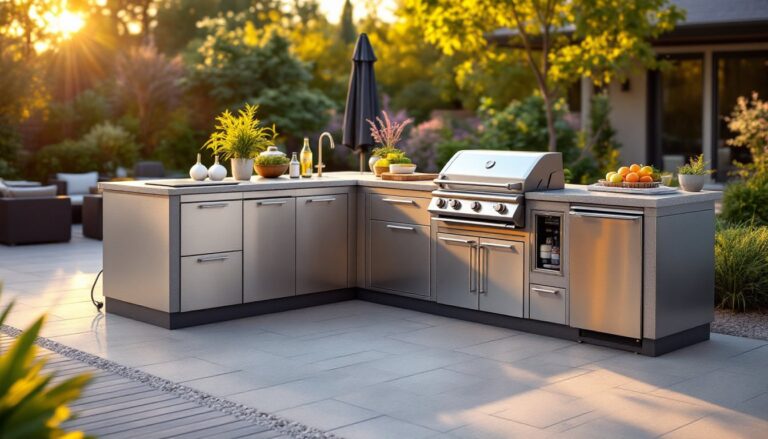
The best outdoor kitchen layout mirrors a professional kitchen’s work triangle: the grill, the prep area, and the serving or plating zone should form a logical path without forcing you to backtrack. A single-wall layout is compact and suits smaller patios: an L-shaped or U-shaped design gives you more prep space and separates cooking from entertaining zones.
Consider sight lines. If your kitchen faces the house, guests can interact with the cook. If it’s at the patio’s edge, it becomes a focal point without crowding the seating area. Allow at least 3 feet of workspace behind or beside the grill for safe movement and ventilation. If you’re installing an overhead vent or hood, it should extend at least 6 inches beyond the cooking surface and be vented directly away from seating areas.
Storage should be easily accessible during cooking, don’t stash tongs or a thermometer 10 feet away. Drawers with soft-close hinges feel upscale and prevent slamming in wind. Open shelving looks stylish but collects dust: glass doors on lower cabinets balance aesthetics with protection. Electrical outlets should be spaced every 2 to 3 feet along the counter to avoid extension cord tangles. Check local codes for outlet placement near water sources (typically 6 feet away).
Lighting and Ambiance: Creating an Upscale Outdoor Dining Experience
Poor lighting turns even a gorgeous outdoor kitchen into a frustrating workspace when the sun sets. Layer your lighting: task lighting over work surfaces, accent lighting to highlight landscaping or architectural features, and ambient lighting for the seating area.
LED recessed lights or under-cabinet strips illuminate prep zones without creating glare or heat. Dimmable options let you adjust intensity for different moods and times of day. String lights or pendant fixtures over a bar or high-top table add warmth and sophistication, these work well paired with dim ambient lighting. Solar stake lights and path lighting guide guests safely through the space.
All outdoor lighting should be rated for wet locations and use GFCI protection on circuits. Consider a timer or smart controls so you’re not manually flipping switches as dusk approaches. Uplighting on trees or walls creates drama, while ground-level lights prevent trips on steps. The goal is to feel like you’re at a restaurant or resort, not squinting to see your food or stumbling over unlit pathways. Good lighting elevates outdoor kitchen luxury instantly and makes evening entertaining genuinely pleasant rather than a compromise.
Budget Considerations and ROI for Luxury Outdoor Kitchens
A truly high-end outdoor kitchen, with built-in cabinetry, premium appliances, stone counters, and proper utilities, typically ranges from $15,000 to $50,000+, depending on size, finishes, and whether you’re hiring pros for electrical, gas, or structural work. Regional labor costs, material availability, and complexity of site prep all influence final price. A simple grill station costs far less: a resort-quality setup with multiple cooking zones, a wood-fired oven, and full outdoor kitchen luxury finishes runs much higher.
ROI varies. Outdoor kitchens don’t return 100% of investment like a kitchen remodel might (which can recoup 50-80% at resale). But, they do increase home appeal, extend living space, and pay dividends in daily enjoyment if you entertain frequently or love cooking outdoors. A well-designed, durable outdoor kitchen adds perceived value even if the literal dollar return is modest, buyers notice and appreciate the craftsmanship.
To stretch your budget wisely, prioritize the grill and cabinetry structure first, then add finishing touches like lighting, premium counters, and accent appliances over time. A phased approach lets you spread costs while enjoying the space immediately. Get multiple quotes from contractors familiar with outdoor kitchens, not just general carpenters. Ensure estimates include all permits, inspections, and utility connections, hidden costs often emerge mid-project. Factor in annual maintenance: sealing counters, cleaning stainless steel, and replacing worn parts aren’t free. That said, a well-executed outdoor kitchen delivers enjoyment for 15+ years, making it a worthy investment for serious entertainers.
Conclusion
Designing a high-end outdoor kitchen means balancing beauty, durability, and smart function. Start with solid fundamentals, proper drainage, reinforced structure, and code-compliant utilities. Choose materials and appliances rated for outdoor use, not shortcuts. Plan your layout to encourage natural workflow and social interaction. Layer lighting to make the space usable day and night. Be realistic about budget and ROI, but don’t skimp on the skeleton of the project: cheap cabinetry or undersized utilities will frustrate you for years. An outdoor kitchen luxury space isn’t just a weekend feature, it’s an investment in how you live, entertain, and enjoy your home.