

In urban landscapes where green space is often scarce, rooftop gardens are transforming rooftops into vibrant oases. These elevated gardens not only enhance the aesthetic appeal of buildings but also provide a sanctuary for city dwellers seeking a breath of fresh air. With the rise of sustainability, rooftop gardens are becoming a popular solution for improving air quality and promoting biodiversity in bustling cities.
Creating a rooftop garden offers numerous benefits, from growing fresh produce to providing a relaxing retreat. It’s a creative way to utilize otherwise unused space while contributing to a healthier environment. As more people recognize the importance of green living, rooftop gardens are paving the way for a greener future, one rooftop at a time.
Overview of Rooftop Gardens
Rooftop gardens are innovative solutions for urban areas that maximize green space usage. These gardens enhance building aesthetics, create serene environments, and improve ecological conditions.
Definition and Purpose
Rooftop gardens refer to green spaces located on the roof of buildings. Their purpose encompasses creating recreational areas, growing food, and promoting biodiversity. Additionally, they contribute to thermal insulation and reduce urban heat island effects, making cities more sustainable.
Benefits of Rooftop Gardens
- Environmental Improvement: Rooftop gardens help in air purification, noise reduction, and stormwater management.
- Energy Efficiency: Vegetation provides insulation, resulting in reduced energy consumption for heating and cooling.
- Biodiversity Enhancement: These gardens support various plant species and attract pollinators, contributing to urban biodiversity.
- Access to Fresh Produce: Rooftop gardens enable individuals to grow vegetables and herbs, promoting healthier eating habits.
- Community Engagement: These spaces serve as gathering spots, fostering social interaction and community involvement.
Design Considerations
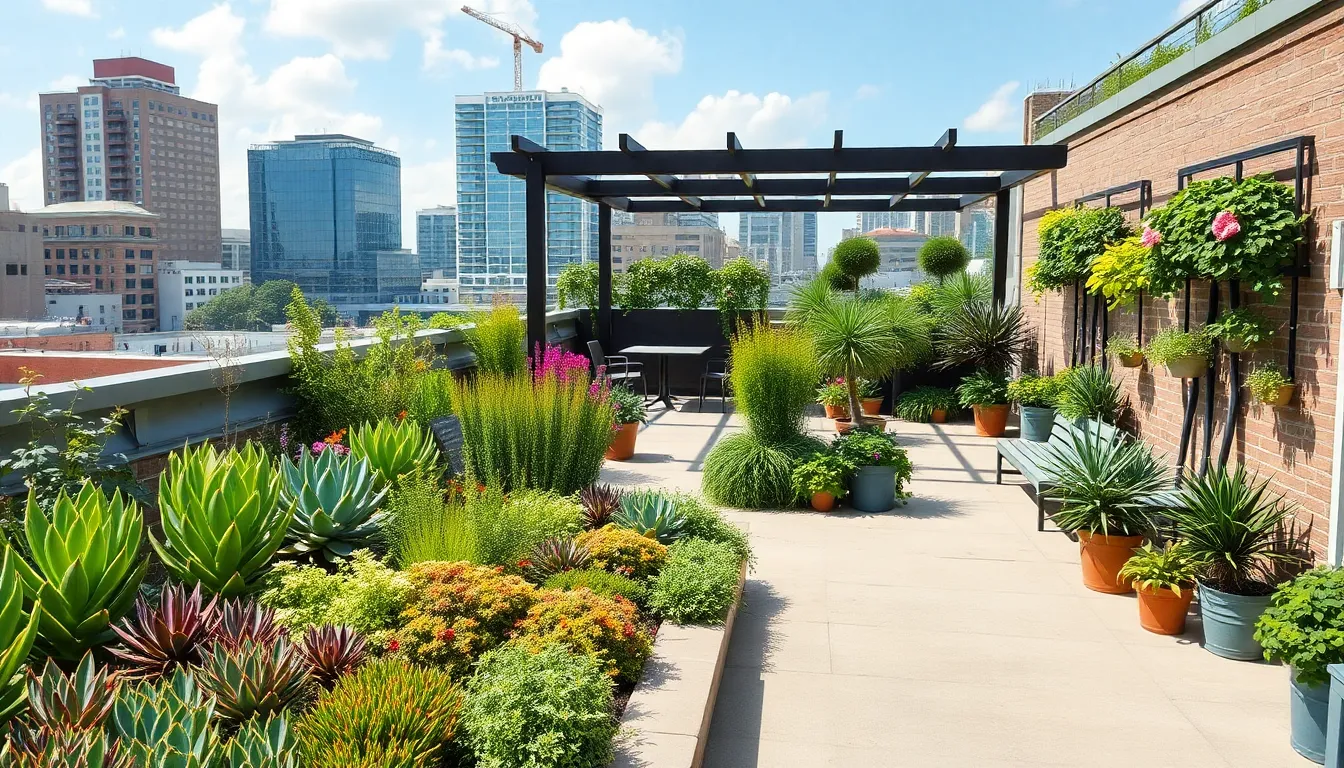
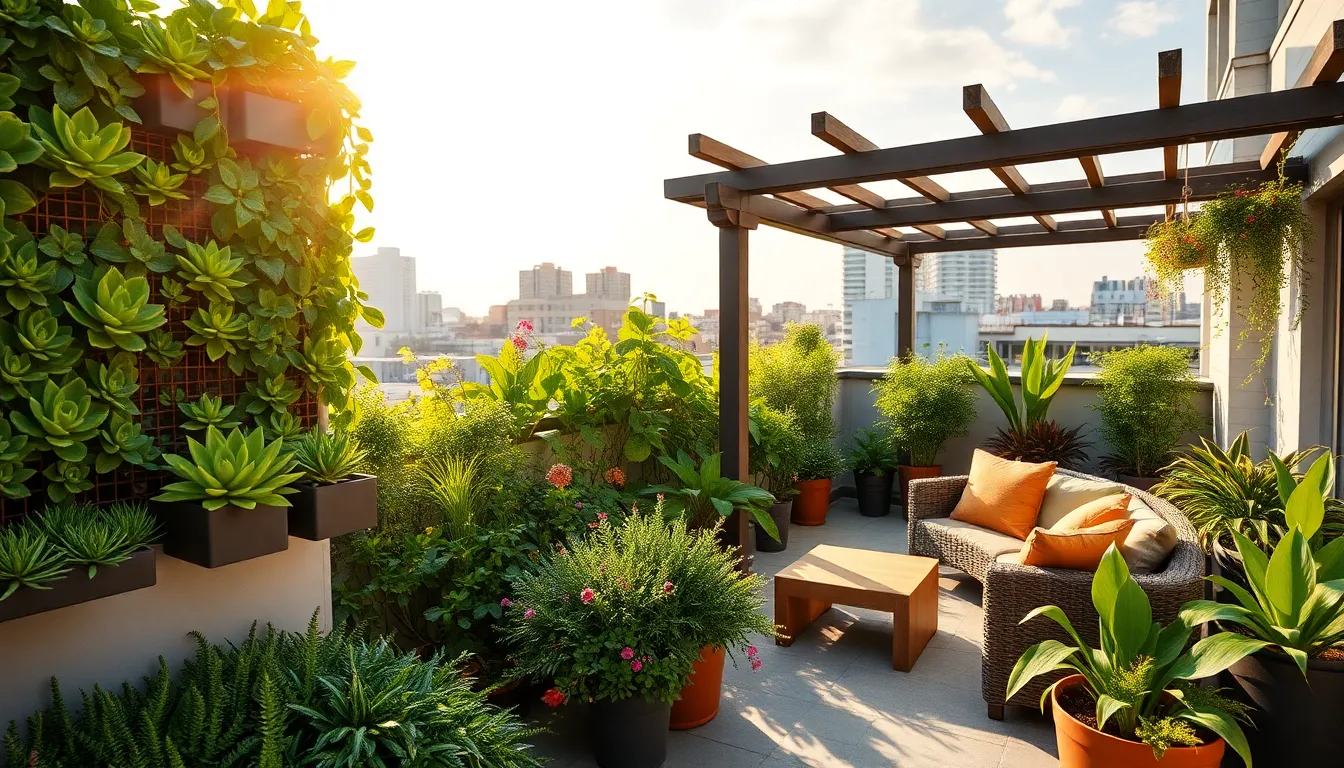
Designing a rooftop garden involves careful planning and the selection of appropriate plant species. Implementing efficient space utilization and choosing suitable plants significantly enhances the garden’s functionality and sustainability.
Space Planning and Layout
Effective space planning maximizes accessibility and usability in rooftop gardens. Considering factors like sunlight exposure, wind patterns, and structural support is crucial.
- Zoning: Divide the garden into functional zones for relaxation, food production, and social interaction.
- Pathways: Incorporate clear pathways to promote ease of movement.
- Shade Structures: Use pergolas or umbrellas to provide shade for seating areas.
- Vertical Gardening: Implement vertical planters to optimize limited space and add visual interest.
Plant Selection for Rooftop Gardens
Choosing the right plants ensures success in rooftop gardens. Select species that thrive in the unique rooftop environment.
- Drought-Resistant Plants: Opt for succulents or native perennials that require less water.
- Edible Plants: Incorporate vegetables and herbs for fresh produce.
- Pollinator-Friendly Plants: Include flowering plants to attract bees and butterflies.
- Container Size: Choose pots with adequate depth to support root growth.
By addressing space planning and plant selection, rooftop garden designers can create efficient and beautiful green spaces that thrive in urban settings.
Environmental Impact
Rooftop gardens significantly contribute to ecological well-being, addressing urban challenges while enhancing the environment. These gardens mitigate urban heat and promote biodiversity, fostering healthier living spaces.
Urban Heat Island Effect
Rooftop gardens effectively combat the urban heat island effect, which occurs when cities experience higher temperatures due to concrete and asphalt. By replacing heat-absorbing surfaces with vegetation, rooftop gardens lower surrounding air temperatures. Studies show that green roofs can reduce rooftop temperatures by up to 30°F during peak summer months, leading to decreased energy consumption for cooling. This cooling effect not only benefits buildings but also improves overall urban air quality.
Biodiversity and Wildlife Habitat
Rooftop gardens create essential habitats for various plant species, insects, and birds, enhancing urban biodiversity. These green spaces attract pollinators like bees and butterflies, supporting ecosystem health. Research indicates that rooftop gardens can increase plant diversity by 60% compared to traditional green spaces. Additionally, they serve as crucial stopping points for migratory birds, offering food and shelter in densely populated areas. By fostering these habitats, rooftop gardens contribute to urban ecological networks and promote biodiversity.
Maintenance and Care
Rooftop gardens require consistent maintenance to thrive. Proper care ensures plant health, aesthetic appeal, and functional benefits.
Watering and Irrigation
Watering plays a critical role in rooftop garden care. Established plants typically need watering once a week, while newly planted ones require more frequent attention, especially during dry spells.
Implementing an irrigation system, such as drip irrigation or soaker hoses, promotes water efficiency by delivering moisture directly to the plant roots. This approach reduces evaporation and conserves water, which is essential in rooftop environments. Monitoring soil moisture levels helps determine when to water, ensuring plants receive adequate hydration without overwatering.
Seasonal Maintenance Tasks
Seasonal maintenance tasks for rooftop gardens include:
- Spring: Pruning dead or damaged plants revitalizes growth, while adding compost enriches soil nutrition for the growing season. Inspections of the irrigation system prepare it for high-demand periods.
- Summer: Regular pest control measures prevent infestations that threaten plant health. Mulching retains soil moisture, reducing the frequency of watering during heatwaves.
- Fall: Planting cover crops prevents soil erosion and improves nutrient levels during winter months. Cleaning up fallen leaves and debris minimizes mold growth and pest habitat.
- Winter: Winterizing plants includes protecting delicate species with burlap or mulch. Monitoring ice or snow accumulation on the garden structure ensures safety and prevents damage.
Consistent seasonal attention to these tasks enhances the overall health and productivity of rooftop gardens, allowing them to flourish in urban settings.
Popular Rooftop Garden Examples
Rooftop gardens exist in various forms, showcasing their versatility and appeal across different settings. Below are prominent examples categorized into residential and commercial rooftop gardens.
Residential Rooftop Gardens
Residential rooftop gardens transform private spaces into lush retreats. They often feature a combination of landscaping elements like seating areas, water features, and diverse plant selections. Some notable examples include:
- Green Roofs in Urban Apartments: Apartments leverage rooftop spaces for small vegetable plots or ornamental gardens, providing homeowners fresh produce and serene environments.
- Community Rooftop Gardens: Several neighborhoods have come together to establish community gardens, fostering friendships and empowering residents to grow their own food.
- Sky Gardens: Luxury penthouses frequently incorporate sky gardens, featuring mature trees and expansive views, adding significant aesthetic and property value.
Commercial Rooftop Gardens
Commercial rooftop gardens enhance corporate environments and attract customers. Various industries utilize these spaces creatively, demonstrating their economic and ecological benefits. Noteworthy examples include:
- Corporate Campuses: Many corporations invest in rooftop gardens to promote employee wellness and facilitate relaxation areas. They often utilize edible landscaping and seating zones.
- Hotels and Restaurants: Establishments frequently grow herbs, vegetables, and fruits on rooftops for farm-to-table dining experiences, emphasizing sustainable sourcing.
- Public Health Facilities: Hospitals and health centers demonstrate a commitment to healing environments through green roofs that help reduce stress for patients and visitors alike.
These examples illustrate how rooftop gardens enhance both residential and commercial spaces, providing ecological benefits and urban beautification.